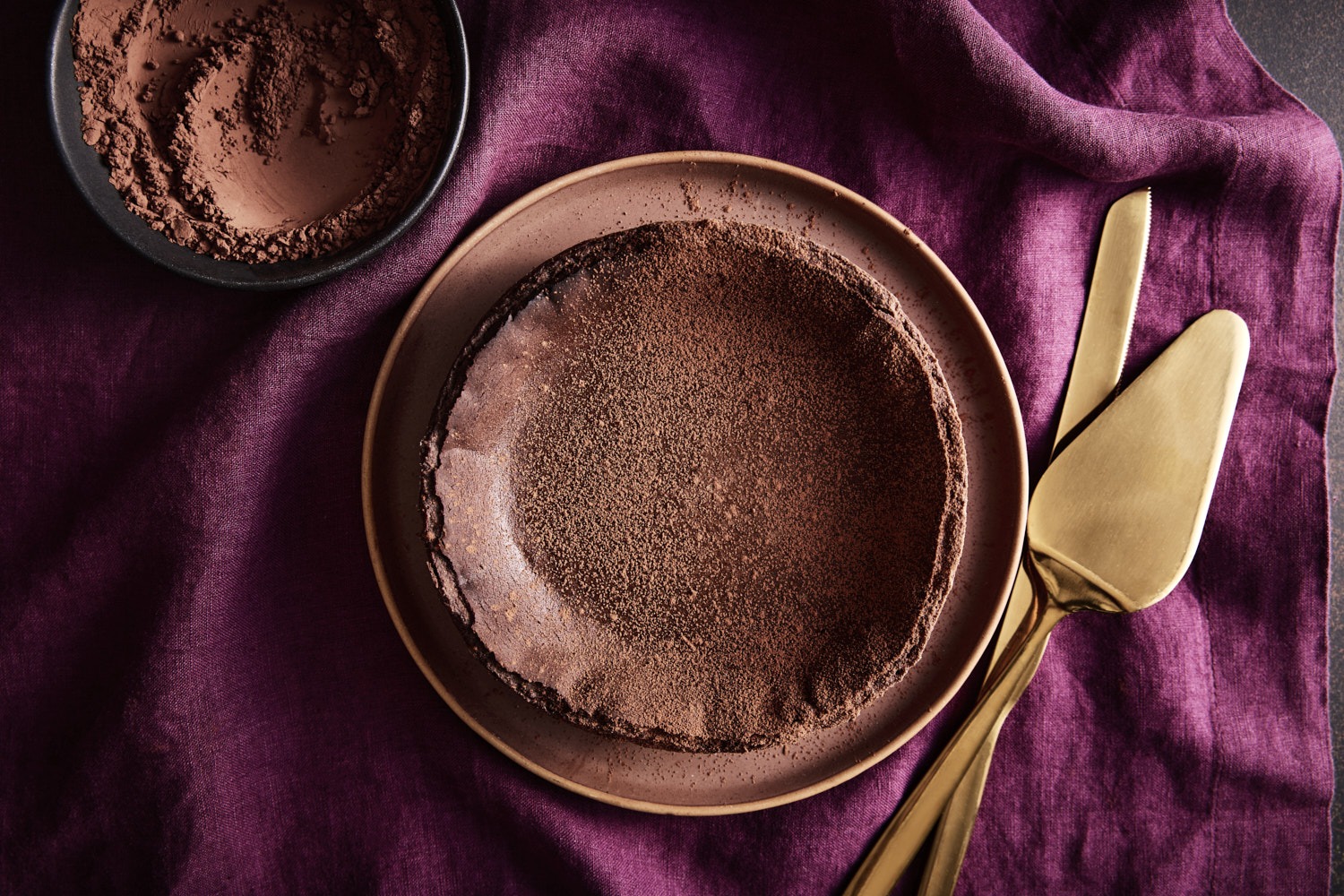
Shadow control techniques are the underlying discipline of any food or beverage image that looks high end and luxurious. Ask any cinematographer or art director what defines luxury or high-end commercial photography, they’ll tell you the same thing: It’s not the light. It’s the shadows.
In luxury or high-end commercial photography, the light has intention. Every highlight is placed. Every shadow is earned. Nothing in the frame happens by accident. This is as true for a warm, sun-drenched lunch spread as it is for a dark, moody whiskey shot.
Whether you shoot commercial or editorial work, shoot in a rental studio or your own living room, these five shadow control techniques are the foundation of high-end food and beverage photography.
Let’s review them.

Editorial vs. Commercial: Two Aesthetics of Shadow
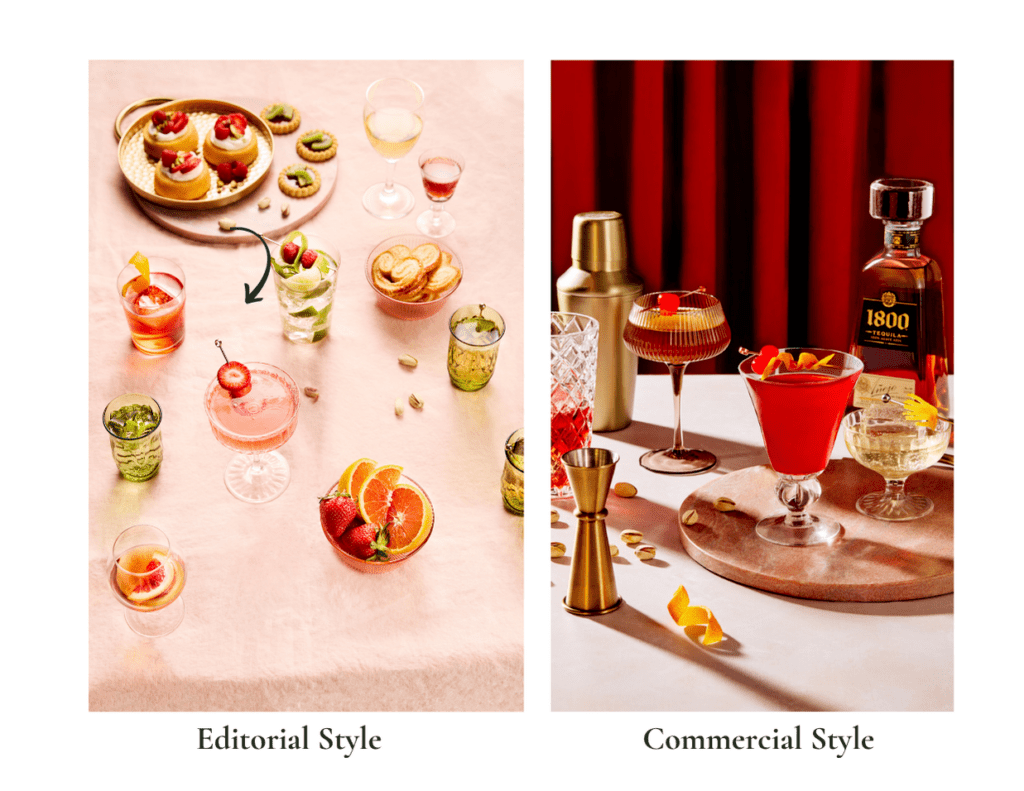
Before you place a single light, it’s important to know which mode you’re working in. Editorial and commercial lighting are defined by two different aesthetics, although the lines may occasionally be a bit blurred.
Editorial lighting typically is natural, or it mimics natural light, whether that light is diffused and soft, or hard and directional with sharp shadow edges. The light looks like it belongs to the scene. The storytelling lives in that naturalness.
Commercial lighting tends to look produced. The goal is not necessarily a natural light look. The lighting is meant to achieve the goal of the creative brief. The lights aren’t simply positioned, shadows falling where they may.
Instead, the shadows are consciously placed. Highlights are shaped. Every decision about the light is visible in the image, because every decision is made deliberately. Control and repeatability are non-negotiable, and the stakes are high.
Understanding the difference between these two approaches to light changes how you read a brief. Editorial gives you latitude to follow the light. The commercial style asks you to command it. Both require shadow control. What changes is the precision demanded of you.
1. Light Placement and Angle
Light placement and angle are the first decisions you make in your set-up and the ones that determine everything that follows. Where you position your key light relative to your subject controls where the highlights fall, where the shadows begin, and how hard or soft the transition between the two will be.
A single light placed directly in front of your subject flattens it. Move that same light 45 degrees to the side, and you introduce shadow. Move it higher, and the shadow falls downward, catching the texture of the surface. Lower it, and the shadows stretch and elongate.
None of this requires additional equipment. It requires understanding that the angle of your light is the angle of your shadow, and that shadow is what gives food its shape, depth, and dimension in a two-dimensional image.
2. Light Modification
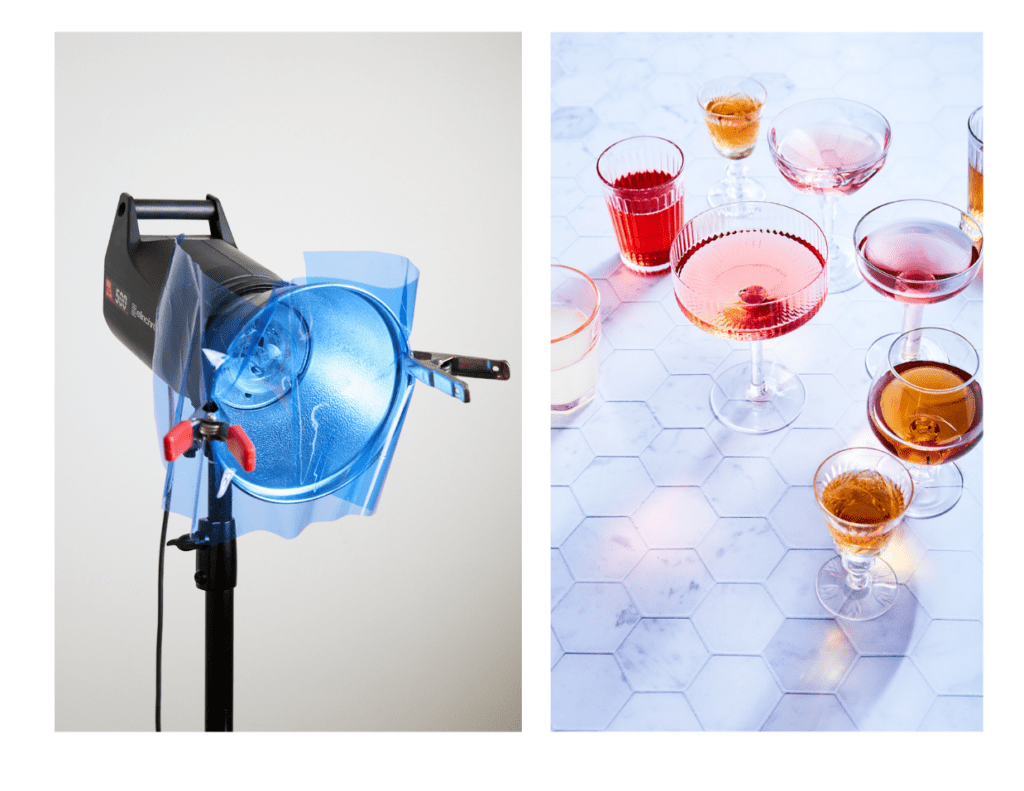
Light modification is how you control the quality of your light before it reaches your subject. Quality in this context means one thing: the hardness or softness of the shadow edge.
A bare bulb strobe produces a hard, sharp-edged shadow. Put a large softbox in front of it, and that shadow edge softens and spreads. The modifier doesn’t change where the shadow falls. It changes how it falls.
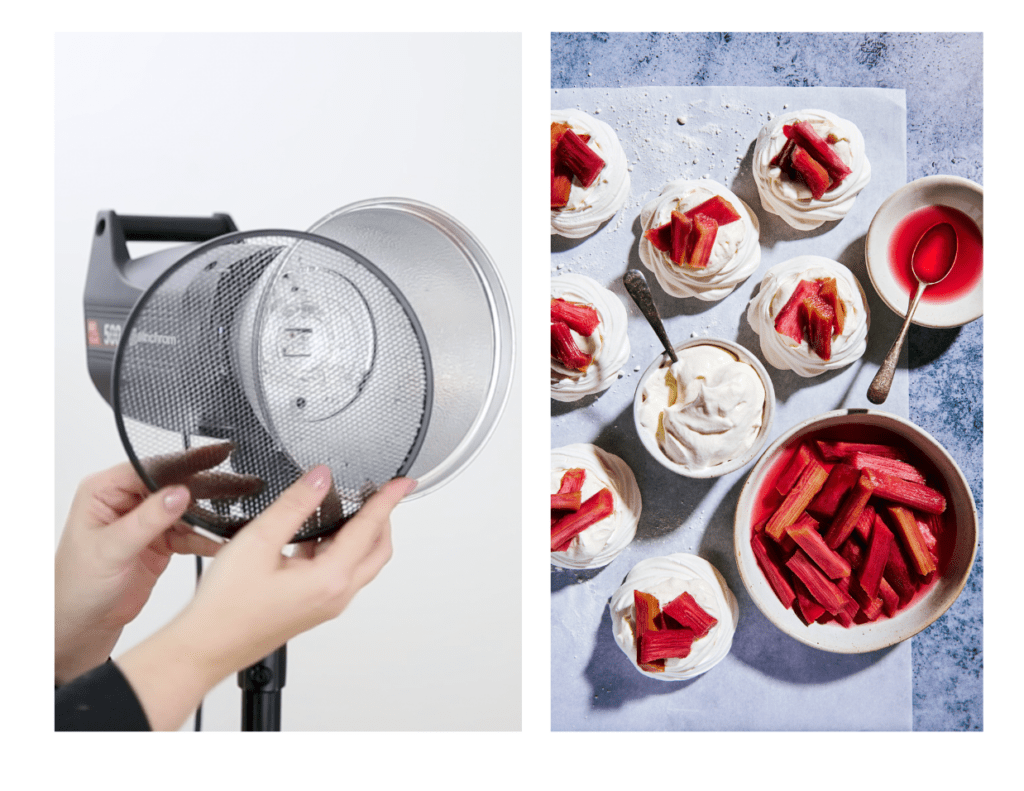
For high-end food photography, the choice of modifier is a creative decision as much as a technical one. A large softbox or scrim suits bright, airy scenes where soft, wrapping light is the foundation. A small source with a single layer of diffusion paper produces a quality closer to direct sun — directional and precise, with shadow edges that are sharp but not harsh.
A grid narrows the beam of any source, keeping light where you point it and out of areas where you don’t want it. Reflectors, whether silver, gold, or white, modify the quality of light, with each surface producing a different colour temperature and intensity of fill.
The modifier you choose sets the character of the image. Everything else is refinement.
3. Subtractive Lighting
Subtractive lighting is the technique most photographers don’t learn until they have mastered the basics. The instinct is to add brighter light. Subtractive lighting does the opposite, by removing it.
In practice, this means placing a black card or other type of flag, or a gobo between a light source and your subject, or between a reflective surface and your subject, to block or absorb light that is landing where you don’t want it.
Studio walls bounce light. White surfaces return fill. Even the floor reflects light. All of that ambient bounce softens and fills shadows that were placed deliberately, flattening the image and killing the dimension you worked to create.
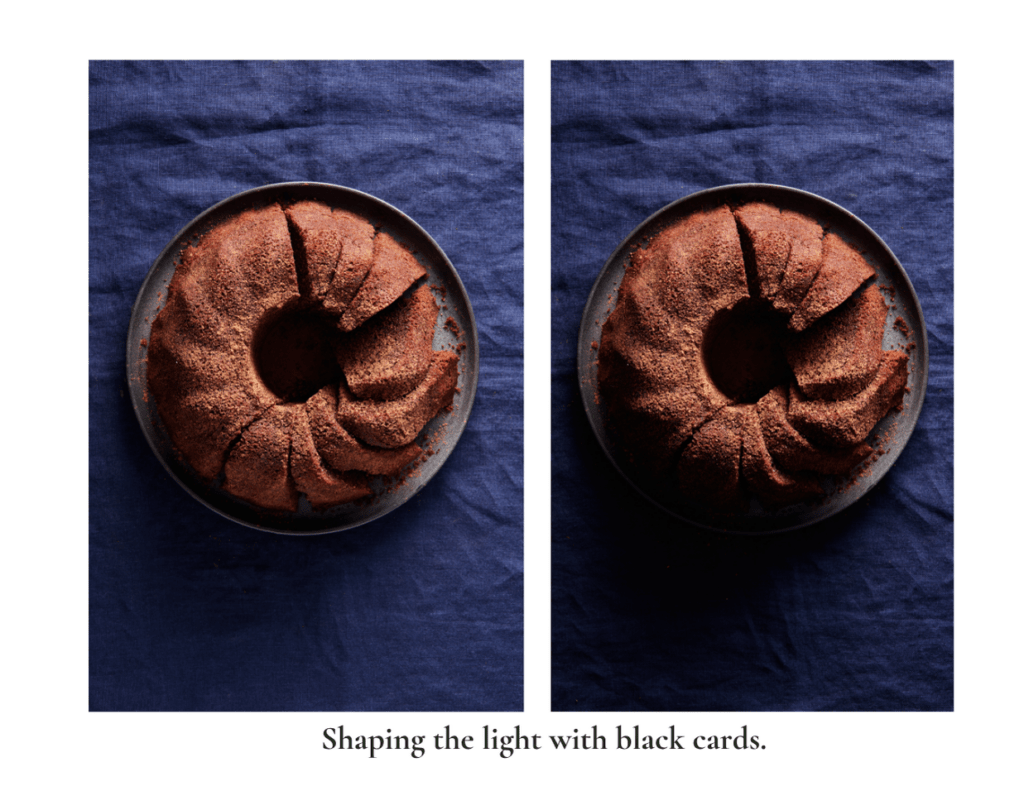
A black card placed opposite your key light absorbs that bounce and deepens the shadow side without adding anything to the scene. A flag placed between your key light and the background cuts spill so the shadow starts exactly where you want it to. A gobo placed at the edge of your frame stops light from wrapping around and washing out areas that should stay dark. These are the kind of carefully considered decisions that define high-end commercial and advertising food photography.
4. Reflectors
Reflectors are the counterpoint to subtractive lighting.
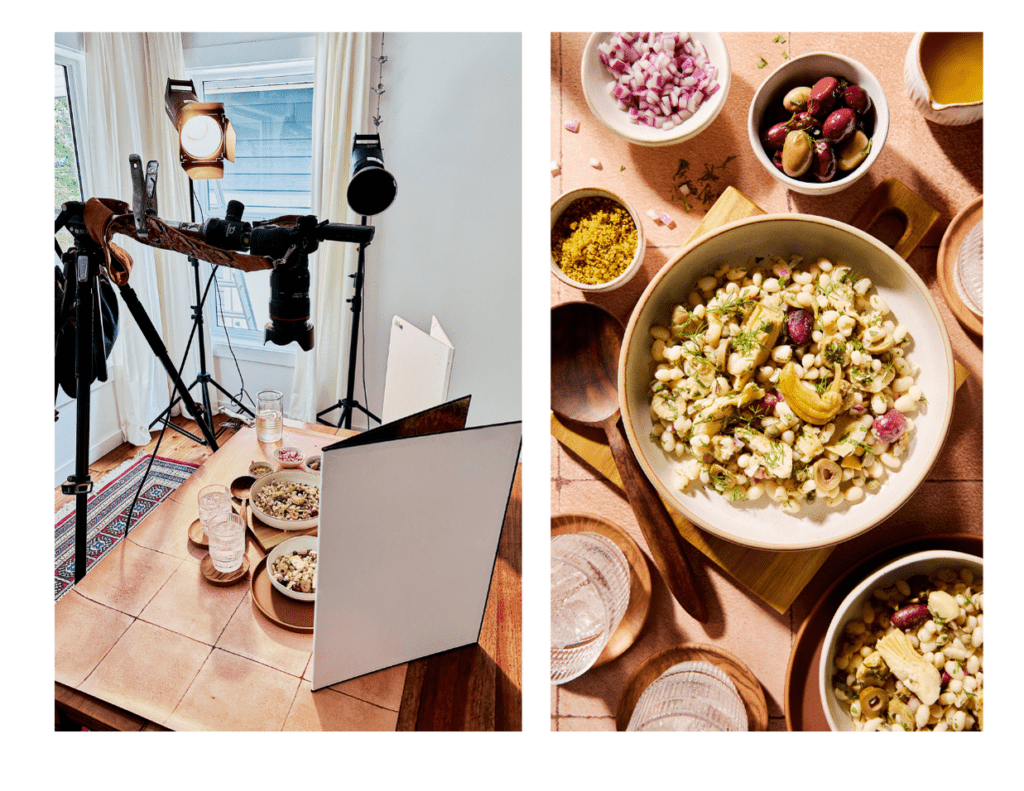
Where a black card removes light, a reflector returns it. The distinction matters because there is a significant difference between adding a second light source to your shadow side and bouncing existing light back into it. A second light source can create a second set of shadows if the power is too high, incorrectly balanced with the key light. A reflector softens and fills without introducing new shadow direction, which keeps the image readable and the lighting logic intact.
In food photography, reflectors are most useful for controlling how much detail is retained on the shadow face of your subject. A white card is the most diffuse, returning a soft, neutral fill. Silver returns a brighter, cooler fill. Gold returns a warmer one.
The distance between the reflector and your subject determines the intensity; move it closer and the fill increases, pull it back and it drops away.
This is a more controllable and repeatable approach than adjusting your key light every time the shadow side needs refinement.
5. Background Separation
Background separation is what keeps your subject from looking stuck to the backdrop behind it. In bright, airy food photography, this is a more common problem than it might seem.
When your subject and background share the same tonal range, for example, a light ceramic bowl on a white backdrop, a pale pasta dish against a warm stone backdrop — the image can read as flat and undifferentiated, regardless of how well the food itself is lit.
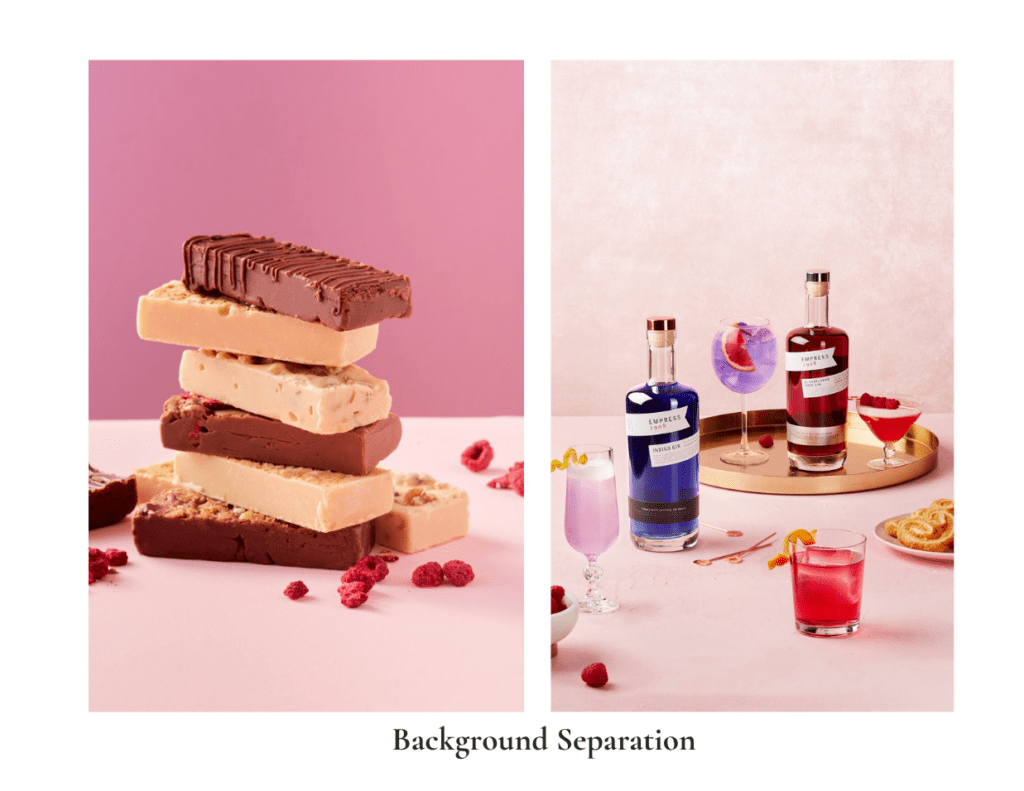
The solution is rarely to add more light. It is to control the relationship between the light falling on your subject and the light falling on your background independently.
A flag placed to one side of the background drops it slightly darker than the subject, creating separation without changing the overall mood of the image. A gobo between your key light and the background keeps the subject light and the background light from competing.
Small differences in brightness between the subject and background can often be enough. The eye reads separation quickly and doesn’t need contrast to be dramatic.
Background separation is often the last thing photographers think about and the first thing that makes an image look uncontrolled. A subject that sits cleanly against its background reads as considered. One that merges with it reads as an accident, regardless of everything else in the frame.
Conclusion
Shadow control is not a technique reserved for dark, moody images or big-budget productions. It’s the underlying discipline of any food and beverage photograph that looks intentional, regardless of palette, mood, or the size of your studio.
Light placement and angle, light modification, subtractive lighting, reflectors, and background separation are the five techniques that separate work that looks considered from work that looks like it simply happened.
The best place to start is not with your own images. Pull up three print advertisements or editorial food images that feel intentional and high-end. Don’t look at the food. Look at the shadows. Where do they start? Where do they end? How hard or soft is the edge? Does the shadow feel placed, or does it feel like it simply happened?
Once you start seeing it, you won’t be able to stop.
This is the second post in a series entitled STEALING FROM CINEMATOGRAPHY. In my next post, I’ll be sharing a three-light setup you can use as a go-to for commercial food and beverage photography.
Want to learn more about artificial light? Grab my LightShaping eBook bundle and stop chasing the sun!